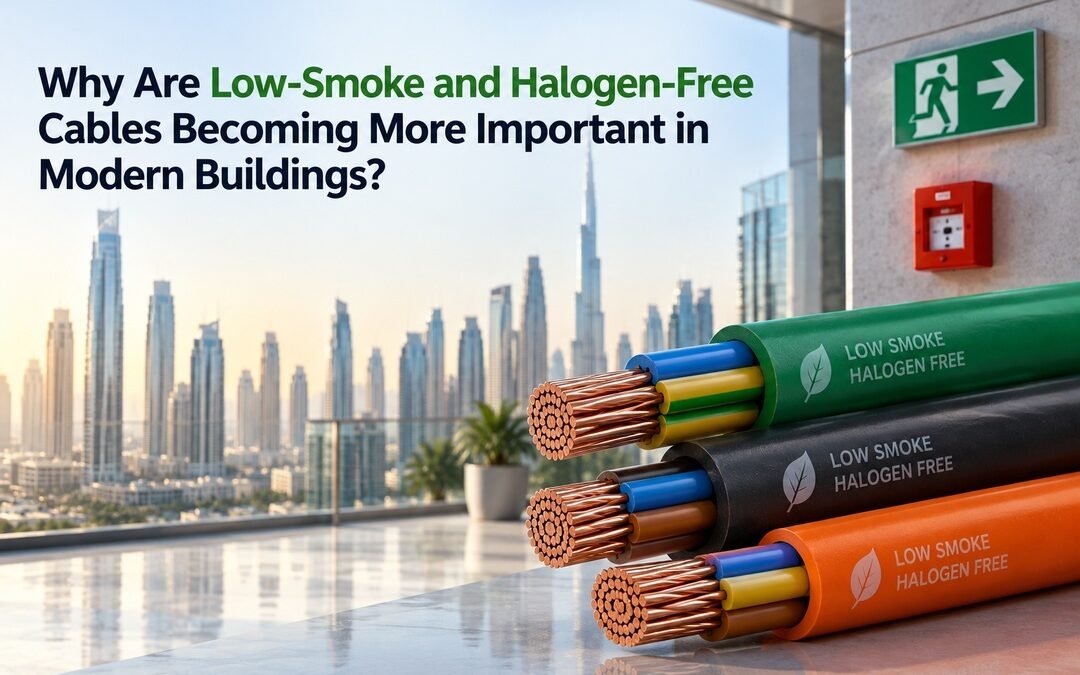
Modern buildings are designed with better electrical systems, advanced technology, and higher occupancy levels. With this progress, electrical safety has also become a major concern. During a fire, cables can contribute to smoke and harmful gases, making evacuation more difficult and potentially damaging sensitive equipment. This is why low-smoke and halogen-free cables are receiving greater attention in residential, commercial, industrial, and public buildings. These cables are designed to produce significantly less smoke and corrosive gases when exposed to fire. Standards such as IEC 61034 address smoke emission testing, while IEC 60754 covers halogen-acid gas characteristics. Choosing the right cable can therefore be an important part of a building’s overall fire-safety strategy.
What Are Low-Smoke and Halogen-Free Cables?
Low-Smoke Zero-Halogen (LSZH) cables use insulation and sheath materials formulated without halogen-based compounds. When exposed to fire, they are designed to generate much less smoke and corrosive halogen acid gas than conventional halogen-containing cables.
This distinction is important because smoke can reduce visibility inside a building, while corrosive gases can affect people and sensitive electrical or electronic equipment.
In India, IS 17048:2018 specifies requirements for halogen-free, flame-retardant, low-smoke cables for fixed electrical installations up to and including 1100 V.
Why Are Low-Smoke and Halogen-Free Cables Important?
1. They Reduce Smoke During Fire
One of the biggest advantages of LSZH cables is their low smoke emission. Heavy smoke can make it difficult for occupants to identify exits and for emergency teams to reach affected areas.
IEC 61034 provides a standardised method for measuring smoke density from burning cables, including assessment through light transmittance.
2. They Limit Corrosive Gas Emissions
Traditional halogen-containing cable materials can release acidic gases when burned. These gases may create additional hazards for people and can corrode electrical and electronic components.
Halogen-free cables are designed to minimise this type of emission, which makes them particularly useful where equipment protection is important.
3. They Support Safer Evacuation
Clear visibility can make a major difference during an emergency. Lower smoke production helps occupants see corridors, staircases, signs, and exits more clearly.
This is especially valuable in enclosed or crowded environments where evacuation may take longer.
4. They Protect Sensitive Equipment
Modern buildings contain equipment such as computers, networking systems, control panels, security systems, and communication devices.
Corrosive smoke can damage such equipment even when the flames do not directly reach it. Research examining cable fire performance has specifically highlighted smoke generation and smoke corrosivity as important considerations for data-centre safety.
Where Are LSZH Cables Commonly Used?
The choice of cable depends on the building design, applicable standards, installation conditions, and project specifications. However, low-smoke and halogen-free cables are particularly relevant in places where fire safety and equipment protection are critical.
Common applications include:
- High-rise buildings
- Hospitals and healthcare facilities
- Schools and educational institutions
- Airports and railway facilities
- Shopping centres
- Data centres
- Commercial buildings
- Industrial facilities
- Public assembly areas
- Communication and control installations
For example, a data centre may have large quantities of power and communication cables alongside expensive electronic equipment. Minimising smoke and corrosive emissions can therefore be an important part of its fire-risk management.
LSZH vs Conventional PVC Cables
Feature | Conventional PVC Cable | Low-Smoke Halogen-Free Cable |
Smoke generation | Can be comparatively high | Designed for lower smoke emission |
Halogen content | May contain halogen compounds | Designed without halogens |
Corrosive gas | Can be significant during burning | Significantly reduced |
Visibility during fire | Can be reduced by dense smoke | Better smoke performance |
Sensitive equipment protection | Lower | Better protection against corrosive smoke |
Typical use | General installations | Safety-critical and enclosed environments |
It is important to remember that LSZH does not automatically mean fire-survival cable. LSZH mainly describes the cable’s behaviour regarding smoke and halogen emissions. A fire-resistant cable has additional requirements for maintaining circuit operation during fire.
What Should You Check Before Buying LSZH Cables?
Simply seeing terms such as “LSZH,” “halogen-free,” or “low-smoke” on a product description should not be the only basis for selection.
Before purchasing, check:
- Applicable Indian or international standards
- Smoke emission test results
- Halogen-acid gas performance
- Flame-retardant properties
- Voltage and temperature ratings
- Conductor size and material
- Manufacturer’s test certificates and documentation
- Project-specific electrical and fire-safety requirements
Independent testing and recognised standards are particularly useful because generic cable terminology can sometimes be interpreted differently by manufacturers.
Why Are They Becoming More Important in Modern Buildings?
Buildings today contain more electrical wiring and electronic equipment than ever before. At the same time, high-rise structures, enclosed spaces, data centres, hospitals, and large commercial facilities may accommodate hundreds or thousands of people.
This combination makes cable fire performance more important. Selecting suitable low-smoke and halogen-free cables can help reduce smoke-related risks while supporting the protection of occupants and sensitive equipment.
For cable manufacturers and suppliers, maintaining consistent quality and providing appropriate compliance documentation is equally important. Acrab Cab focuses on providing cable solutions suitable for modern electrical requirements, helping customers make informed choices based on application, safety, and performance.
Frequently Asked Questions
1. What does LSZH stand for?
LSZH stands for Low Smoke Zero Halogen. It refers to cable materials designed to produce low smoke and minimal halogen-acid gas when exposed to fire.
2. Are LSZH cables completely fireproof?
No. LSZH cables are not fireproof. Their key advantage is reduced smoke and halogen-related emissions. Fire-resistant cables have separate performance requirements.
3. Are LSZH cables suitable for high-rise buildings?
They can be suitable for high-rise and other safety-sensitive buildings, subject to the applicable codes, project specifications, and electrical design requirements.
4. Do LSZH cables protect electronic equipment?
They can reduce the risk of damage caused by corrosive smoke and gases, making them useful around sensitive electronic equipment.
5. Are low-smoke and halogen-free cables more expensive?
They may cost more than some conventional cable options because of their specialised materials and performance requirements. However, the safety and equipment-protection benefits can make them valuable for suitable applications.