Electrical connections are needed in homes, offices, factories, and commercial spaces, but not every application uses the same type of wire. Some equipment requires cables that can handle regular movement, bending, and flexible installation without compromising electrical performance. This is where a 3 core flexible cable becomes useful. Designed with three separate conductors inside a flexible outer sheath, this cable supports a variety of electrical applications, including portable appliances, machinery, and certain power connections. Understanding its construction, working principle, and practical uses helps electricians, contractors, and buyers choose the right cable for their requirements. Acrab Cab offers cable solutions for electrical applications, making it important to understand how three-core flexible cables work and what to consider before selecting one.
What Is a 3 Core Flexible Cable?
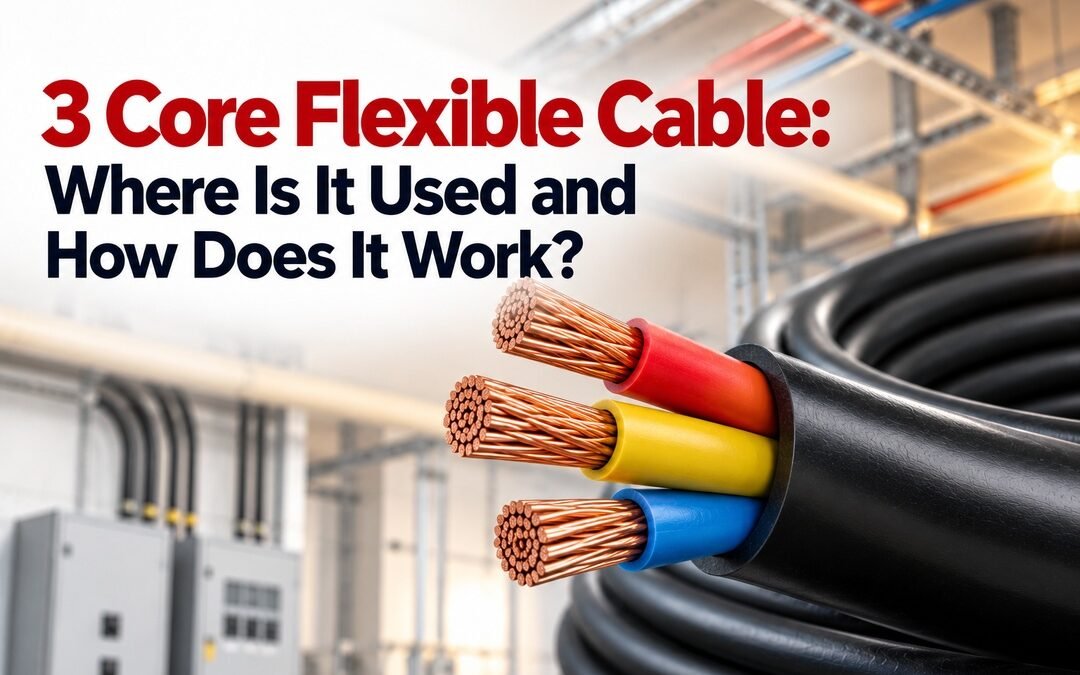
A 3 core flexible cable is an electrical cable containing three insulated conductors enclosed within a protective outer sheath. These conductors are commonly made from copper because of its good electrical conductivity and suitability for flexible cable construction.
In many applications, the three cores serve as live, neutral, and protective earth conductors. However, their actual functions depend on the electrical system, cable design, and intended application.
Flexible cables are generally designed to bend more easily than conventional rigid wiring. This makes them suitable for equipment that requires movement or installations where routing through confined spaces is necessary.
How Does a 3 Core Flexible Cable Work?
A three-core flexible cable works by providing separate conductive paths for electrical connections while keeping the conductors insulated from one another.
In a typical single-phase, three-core arrangement:
- Live core: Carries electrical current from the supply to the connected equipment.
- Neutral core: Provides the return path for current during normal operation.
- Earth core: Provides a protective path for fault current, helping protective devices disconnect the supply during an electrical fault.
The earth conductor is a safety component and should not carry current during normal operation. Correct earthing, suitable protection, and proper termination are essential for safe use.
In applications involving different electrical configurations, the functions of the three cores may vary. Therefore, always follow the cable manufacturer’s specifications and the requirements of the installation.
Where Is a 3 Core Flexible Cable Used?
The versatility of a 3 core flexible cable makes it useful across different industries and electrical environments. Its suitability depends on voltage rating, current capacity, insulation material, temperature limits, and installation conditions.
1. Household Electrical Appliances
Many portable electrical appliances use flexible cables because they need to be moved or repositioned during everyday use. Depending on the appliance’s design, a three-core cable may provide live, neutral, and earth connections.
2. Industrial Machinery and Equipment
Factories often use flexible cables for certain machines, control equipment, and portable electrical tools. Their flexibility helps simplify connections where limited movement or easier cable routing is required.
For equipment involving continuous movement, vibration, or repeated bending, a cable specifically rated for that duty should be selected.
3. Commercial and Workshop Applications
Workshops, maintenance areas, and commercial facilities may require flexible connections for selected tools and equipment. A properly rated cable can support convenient installation while maintaining electrical safety.
4. Electrical Extensions and Portable Equipment
Three-core flexible cables may be used in suitable extension leads and portable equipment that require an earth connection. The complete assembly, including the plug, socket, conductor size, and protective devices, must be appropriate for the intended load.
Key Features of a 3 Core Flexible Cable
Before choosing a cable, understand the features that affect its performance and suitability.
- Flexible construction: Helps with routing and applications involving limited movement.
- Insulated conductors: Separate the cores and reduce the risk of electrical contact between them.
- Protective outer sheath: Provides additional protection against everyday installation stresses.
- Different conductor sizes: Available cable sizes support different current and application requirements.
- Application-specific insulation: Materials and ratings vary according to operating temperature, environment, and electrical requirements.
These features should always be checked against the manufacturer’s technical datasheet rather than assumed from the cable’s appearance.
How to Choose the Right 3 Core Flexible Cable
Selecting a cable involves more than checking the number of cores. Consider the following factors before purchasing:
Selection Factor | What to Check |
Conductor size | Current load and permissible voltage drop |
Voltage rating | Compatibility with the electrical supply |
Insulation and sheath | Temperature, moisture, and environmental conditions |
Flexibility rating | Occasional bending or continuous movement |
Safety standards | Applicable certifications and installation requirements |
Avoid selecting an undersized cable, as excessive current can cause overheating and create a fire risk. Consult a qualified electrician when calculating load requirements or choosing cables for machinery.
Acrab Cab can be approached for information about its available cable products and their specifications, helping buyers identify options suited to their intended applications.
Conclusion
A 3 core flexible cable provides three insulated conductive paths in a flexible construction, making it useful for suitable household appliances, portable equipment, workshops, and industrial applications. Its performance and safety depend on choosing the correct conductor size, insulation, voltage rating, and flexibility class. Understanding these factors helps prevent unsuitable installations and supports reliable electrical connections. For product specifications and cable selection guidance, contact Acrab Cab and discuss your electrical application with its team.
Frequently Asked Questions
1. What is a 3 core flexible cable used for?
It is used for suitable electrical appliances, portable equipment, workshops, and certain industrial machinery. The correct cable depends on electrical load, voltage, environmental conditions, and whether the equipment requires an earth connection.
2. What are the three cores in a flexible cable?
In a typical single-phase arrangement, the cores serve as live, neutral, and protective earth. However, core functions can vary according to the cable design and electrical application, so the manufacturer’s identification and specifications should always be followed.
3. Is a 3 core flexible cable suitable for industrial use?
Yes, certain three-core flexible cables are suitable for industrial applications. The cable must be rated for the equipment’s electrical load, temperature, environmental conditions, and movement requirements. Continuous-flexing machinery may require a specially designed cable.
4. How do I select the correct cable size?
Cable size depends on current demand, cable length, voltage drop, installation method, ambient temperature, and applicable electrical standards. A qualified electrician should verify these factors before installation to help prevent overheating and electrical hazards.
5. What should I check before buying a 3 core flexible cable?
Check the conductor material and size, voltage rating, insulation type, sheath properties, flexibility rating, and applicable safety certifications. Contact Acrab Cab for product information and technical specifications relevant to your electrical requirements.