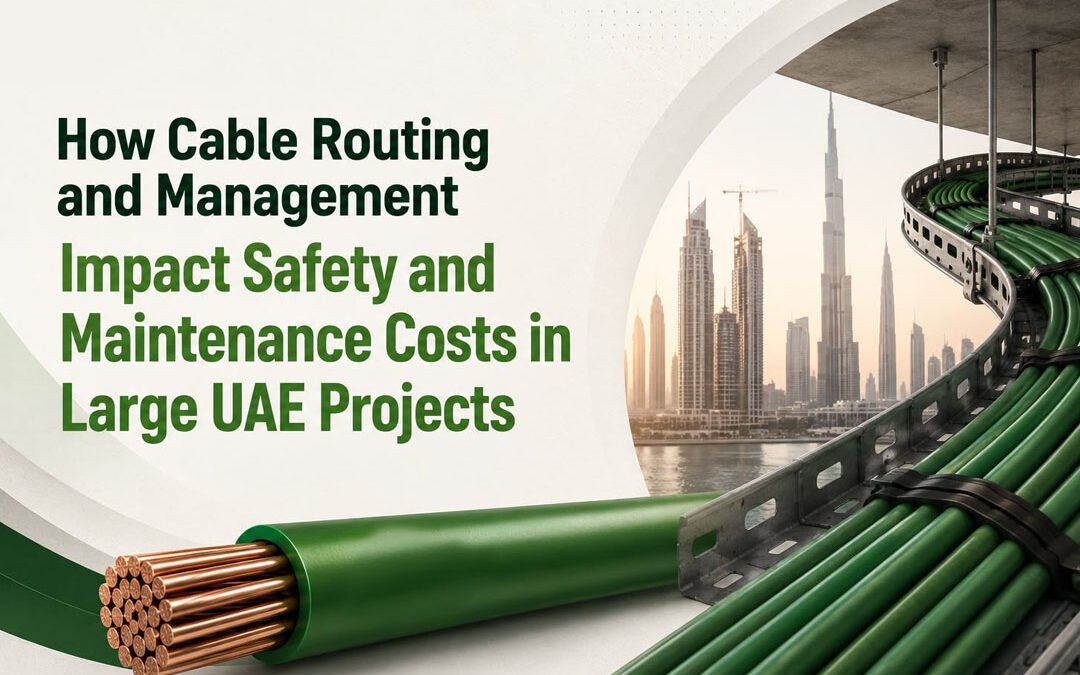
How Cable Routing and Management Impact Safety and Maintenance Costs in Large UAE Projects
Thousands of electrical cables are used in the UAE for large construction and industrial projects to power buildings, machines, lighting systems and communication networks. Cable routing and cable management are more than simply organisation. They contribute significantly to reducing maintenance costs, enhancing electrical safety, and extending the life of the complete electrical system.
The Importance of Proper Cable Routing
The installation of electrical cables through trays, conduits, ducts or raceways is known as cable routing. With a well-designed cable routing system, there are no needless bends, congestion and physical damage. Cable routing is important in large projects in the UAE, where high temperatures and high electrical loads are common; proper routing ensures stability and minimises the risk of cable failure.
Good cable routing also enhances airflow around cables and reduces the risk of overheating. It is particularly critical when the building is part of an infrastructure project, hospital, airport, commercial tower, or similar non-stop operations.
Cable Management for Safety
Cable management ensures the cables remain properly secured, separated and identified. Cables are organised, minimising the risk of electrical issues, short circuits, and damage during maintenance. They also enable technicians to easily find specific cables without disrupting the entire installation.
Cables that are loose or entangled can pose safety risks, cause wear and tear, and cause unexpected downtime. Proper cable management is important for workplace safety and for complying with electrical standards applied throughout the UAE.
Benefits of Good Cable Management
Cables that are not well managed will need more frequent inspections and repairs. Cables are hard to identify if they are not organised in the installation, resulting in higher labour time and maintenance costs.
Structured cable routing and cable management systems enable maintenance personnel to inspect, repair, or replace cables in less time. Less time spent on troubleshooting means lower operational costs and reduced downtime in daily operations. Proper installation also helps prolong the cable’s life, reducing replacement costs over time.
Best Practices for Large UAE Projects
For large developments, cable routing plans should be detailed and developed before installation. Future maintenance is easier with cable trays, cable markers, supports and organised pathways. Periodic testing can prevent big issues by detecting damaged insulation, loose connections or overloaded cable paths.
Using high-quality materials that withstand the UAE’s climate also enhances the system’s reliability. Good records and cable labelling also enable maintenance staff to safely and efficiently work throughout the project lifecycle.
Conclusion
Cable management and cable routing improve safety, maintenance and long-term operational costs. In large-scale projects across the UAE, it is essential to have organised electrical infrastructure to ensure the smooth operation of the electrical system, safeguard equipment, and reduce downtime. Once installed and maintained in accordance with proven methods, safer workplaces are created, and projects remain efficient for many years.
If you want to know more about cable routing and cable management solutions, Acrab Cab offers industry knowledge and insights into reliable cable infrastructure used in modern electrical projects.
FAQs
1. Why is cable routing important in large UAE projects?
Proper cable routing protects electrical cables from damage, prevents overheating, improves system reliability, and simplifies maintenance. It also reduces safety risks and supports efficient operation throughout the project’s lifespan.
2. How does cable management reduce maintenance costs?
Good cable management helps technicians quickly identify, inspect, and repair cables. This reduces labour time, minimises downtime, prevents unnecessary replacements, and lowers overall maintenance expenses over the life of the project.
3. What problems can poor cable management cause?
Poor cable management can lead to overheating, damaged insulation, electrical faults, difficult maintenance, longer repair times, higher operational costs, and increased safety risks for workers and equipment.
4. Which industries benefit most from proper cable routing?
Industries such as construction, manufacturing, healthcare, airports, commercial buildings, power plants, and infrastructure projects benefit significantly from organised cable routing and professional cable management systems.
5. How often should cable management systems be inspected?
Cable management systems should be inspected regularly in accordance with project requirements and maintenance schedules. Routine inspections help identify wear, loose connections, damaged cables, and potential electrical hazards before failures occur.