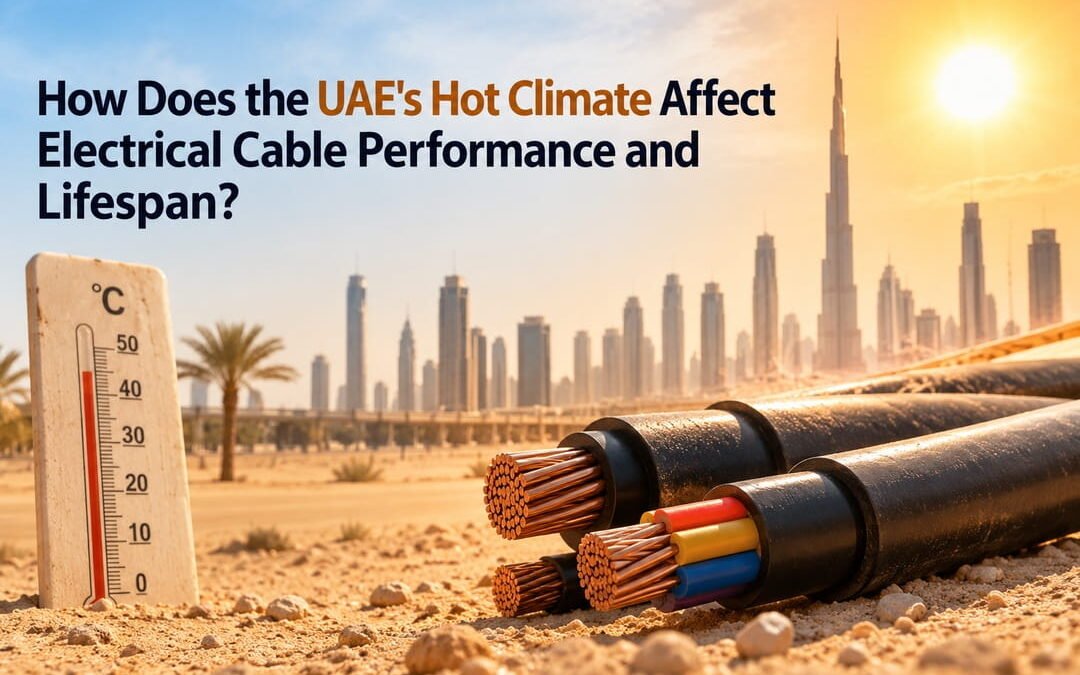
The UAE’s hot climate can have a significant effect on electrical cables, especially when they are installed outdoors, in industrial facilities, construction sites, or areas exposed to direct sunlight. High temperatures can increase conductor resistance, accelerate insulation ageing, and reduce the overall service life of cables. Dust, humidity, and frequent temperature changes can add to these challenges. Choosing cables with suitable insulation, temperature ratings, and construction is therefore important for safe and reliable electrical systems. Understanding how heat affects cable performance helps businesses select the right products and avoid premature failures. With properly designed and installed cables, these risks can be managed effectively. Acrab Cab provides cable solutions designed to support dependable electrical installations in demanding environments.
How Does Heat Affect Electrical Cable Performance?
Electrical cables are designed to operate within a specific temperature range. When the surrounding temperature rises, the cable conductor also becomes hotter during operation.
Copper and aluminium conductors naturally develop higher electrical resistance as their temperature increases. This can lead to greater power losses and additional heat generation.
If the cable operates continuously at temperatures above its recommended rating, several problems may occur:
- Increased voltage drop
- Higher energy losses
- Excessive conductor heating
- Faster insulation deterioration
- Reduced cable lifespan
For this reason, cable selection should consider both the expected ambient temperature and the load carried by the cable.
Impact of UAE Temperatures on Cable Insulation
The insulation surrounding a conductor protects against electrical leakage, short circuits, and physical damage. However, prolonged exposure to high temperatures can gradually change its properties.
Heat can cause insulation materials to become harder, brittle, or less flexible over time. In outdoor installations, direct sunlight can make the cable surface considerably hotter than the surrounding air.
UV radiation can also contribute to surface deterioration when cables are not designed for outdoor exposure. This is particularly important for cables installed on rooftops, external walls, solar installations, and open construction areas.
Selecting insulation with an appropriate temperature and environmental rating can help reduce these effects.
Why Cable Temperature Rating Matters
A cable’s temperature rating indicates the maximum conductor temperature it is designed to withstand under specified operating conditions.
For example, cables with insulation materials designed for higher temperatures can generally tolerate demanding environments better than standard low-temperature cables.
However, a higher temperature rating does not mean a cable can be operated continuously under any condition. Engineers must also consider:
- Ambient temperature
- Cable installation method
- Number of cables installed together
- Electrical load
- Ventilation
- Direct solar exposure
- Installation location
Correct sizing and installation are just as important as selecting a suitable cable.
UAE Climate Factors Beyond Heat
Heat is not the only environmental factor affecting electrical cable lifespan in the UAE.
Humidity and Moisture
Coastal areas can experience high humidity and salty air. Moisture can affect cable sheaths, connectors, and other components if they are not adequately protected.
Dust and Sand
Dust accumulation can interfere with equipment ventilation and contribute to higher operating temperatures. In industrial environments, regular inspection and cleaning can help maintain system performance.
UV Exposure
Outdoor cables exposed to intense sunlight require suitable UV-resistant materials. Without adequate protection, prolonged sunlight can cause sheath cracking and deterioration.
Temperature Cycling
Cables can experience repeated expansion and contraction as temperatures change between hot daytime conditions and cooler periods. Over many cycles, this may place additional stress on materials and connections.
How to Increase Cable Lifespan in Hot Conditions
Choosing the right cable is only one part of protecting an electrical installation. Proper installation and maintenance also play an important role.
Choose the Correct Cable
Check the cable’s conductor material, insulation type, voltage rating, current-carrying capacity, and maximum operating temperature before installation.
Avoid Overloading
Operating a cable above its recommended current capacity generates additional heat. Continuous overloading can significantly accelerate insulation ageing.
Provide Proper Ventilation
Where cables are installed in enclosed areas, adequate ventilation can help prevent excessive heat accumulation.
Protect Outdoor Installations
Use suitable cable protection systems and products designed for outdoor and UV-exposed applications where required.
Carry Out Regular Inspections
Look for signs such as:
- Cracked or discoloured insulation
- Damaged cable sheaths
- Loose connections
- Unusual heating
- Burning smells
- Repeated electrical faults
Early detection can prevent minor cable problems from becoming major system failures.
Conclusion
The UAE’s hot climate can influence electrical cable performance by increasing conductor resistance, raising operating temperatures, and accelerating insulation ageing. Sunlight, humidity, dust, and temperature fluctuations can create additional challenges, particularly for outdoor installations. Choosing cables with suitable temperature, insulation, and environmental ratings, along with correct sizing and regular maintenance, can help extend their service life. For reliable cable solutions suited to demanding applications, Acrab Cab can be a practical choice for businesses and project requirements.
FAQs
1.Does hot weather reduce electrical cable lifespan?
Yes. Continuous exposure to high temperatures can accelerate insulation ageing and increase conductor temperature, potentially reducing the cable’s useful service life.
2.Why does cable resistance increase with temperature?
As conductor temperature rises, electrical resistance generally increases. This can cause higher energy losses and additional heat during operation.
3.Are outdoor cables more affected by UAE heat?
They can be, particularly when exposed to direct sunlight. UV radiation and high surface temperatures can accelerate deterioration if unsuitable cable materials are used.
4.Can cable overloading make heat-related problems worse?
Yes. Excessive current increases conductor heating. Combined with high ambient temperatures, this can push the cable beyond its recommended operating conditions.
5.What should be considered when choosing cables for UAE projects?
Temperature rating, insulation material, conductor size, voltage rating, installation method, UV exposure, humidity, and expected electrical load should all be considered.